Skip to product information
1 of 3

SKU:

CXE Bearings

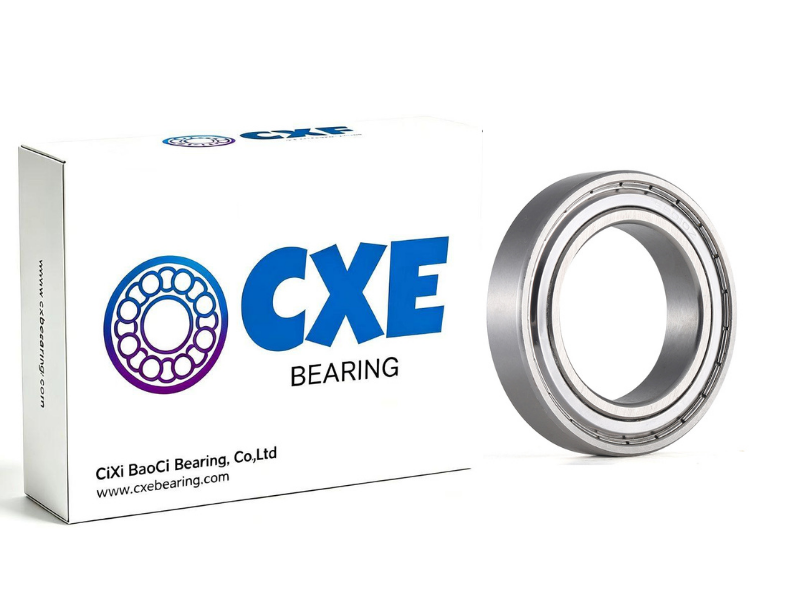
S696ZZ 6mm*15mm*5mm Stainless Steel Bearings

S696ZZ 6mm*15mm*5mm Stainless Steel Bearings

Regular price $0.80 USD
Regular price Sale price $0.80 USD
Sale Sold out
Shipping calculated at checkout.
Quantity

Bearing weight (kg):

Inner Diameter (mm)  :6mm

Outer Diameter (mm) :15mm

Width (mm):5mm

Basic static load rating(N):

Basic dynamic load rating (N) :

Grease selection

1. Hangu2-general purpose : (-20℃~+150℃)

2. FM222-Food-grade : (-20℃~+150℃)

3. XHP222-Water-resistant : (-20℃~+150℃)

4. Chevron SRI-2 Grease: (-30℃~+150℃)

5. SuperN-Long-lasting : (-50℃~+150℃)

6. Multemp SRL -low temp : (-50℃~+150℃)

7. Multemp SB-M-high speed/temp:  (-40℃~+200℃)

Radial Clearance selection

The radial clearance values for this bearing model are as follows (in micrometers, um):

1. Why Do Bearings Need "Clearance"?

You might think that the tighter a bearing fits, the better it performs. However, that’s not the case. Bearings require a specific amount of internal clearance to handle two main issues:

Thermal Expansion: Bearings generate heat during operation, causing the metal components to expand. Without enough clearance, this expansion would cause the bearing to seize or "lock up."

Interference Fit: When a bearing is pressed onto a shaft, the inner ring stretches slightly. This physical expansion "consumes" a portion of the original internal clearance.

2. Bearing Clearance Ratings (ISO 5753)

Bearing clearance is typically categorized by the following common levels: C2, C0 (Normal), C3, and C4.

3. When to Choose C2, C0, C3, or C4?

The core logic for selecting a clearance grade is to predict how much "residual clearance" will remain while the bearing is running.

Once installed, the original clearance decreases due to the tight fit and thermal expansion. If the clearance is too small, the bearing will overheat and fail; if it is too large, it will cause vibration and eccentricity.

Here is a selection guide for different working conditions:

1. Choosing C2 (Small Clearance)

Goal: High precision and low vibration.

High Rotational Accuracy: For applications requiring the shaft to be perfectly centered with no "play."

Low Noise: To further suppress vibration in precision small motors.

Operating Conditions: Very precise (light) fits and minimal temperature rise during operation.

Common Applications: CNC machine spindles, small stepper motors, and office automation equipment.

2. Choosing C0 (Standard Clearance) — The Default

Goal: General-purpose balance.

Standard Conditions: Used when the inner ring and shaft have a standard fit, and the outer ring is not overly tight in the housing.

Moderate Temperature: The temperature difference between the bearing and the environment is within 30°C to 50°C

Common Applications: Home appliances, water pumps, gearboxes, and most general machinery.

3. Choosing C3 (Large Clearance) — The Industrial Standard

Goal: Accommodating thermal expansion and tight fits.

Interference Fits: Used when a tight fit is needed to prevent the inner ring from slipping on the shaft; the resulting "expansion" consumes the extra clearance.

High Heat / High Speed: Fast rotation generates friction heat, causing the balls and rings to expand rapidly.

Large Temperature Gradients: When the bearing's operating temperature is significantly higher than the housing temperature.

Common Applications: Industrial motors, automotive wheel hubs, AC compressors, and high-speed centrifuges.

4. Choosing C4 / C5 (Extra Large Clearance)

Goal: Extreme high temperatures.

High-Heat Environments: For bearings in kilns, industrial dryers, or papermaking machines where metal expansion is extreme.

Heavy Shock Loads: When heavy loads might cause slight shaft deformation.

Common Applications: Kiln cars, continuous casters, vibrating screens, and large power generators.

vibration acceleration-dB

In the bearing industry, codes like Z1, Z2, and Z3 refer to the vibration acceleration levels of a bearing, which are commonly known as "noise levels."

To put it simply, these codes represent the magnitude of vibration produced by the bearing during operation: the higher the number, the lower the vibration, and the quieter the operation

ISO 15242 Vibration Grade

vibration velocity

The vibration velocity values for this bearing model, measured in um/s according to the ISO 15242 standard, are as follows:

What is the V-Rating (Vibration Velocity)?

The V-Rating is a critical index for evaluating the overall quality of a bearing under the ISO 15242 standard. It measures vibration velocity (typically in um/s) while the bearing operates under specific speeds and loads to capture vibration energy across low-to-mid frequency ranges.

This rating serves as an international benchmark for operational smoothness. A higher V-Rating (such as V1, V2, or V3) indicates that the bearing has undergone rigorous and precise quality control. This includes:

Superior Raceway Geometry: Strict limits on roundness, waviness, and surface roughness.

High-Precision Components: Enhanced surface finish of the steel balls and minimized eccentricity (ovality) of the retainer/cage.

Exceptional Assembly: Higher rotational accuracy and cleaner internal environments.

In short, a higher ISO 15242 grade ensures that the bearing internal components are more precisely machined and assembled, resulting in quieter performance and a longer service life

View full details

Shipping Notes

1. Shipping cost is $4.45 per kg, plus a $62 First weight charge.

2. Mixing different bearing types is allowed

Delivery term: 25 days from order date to receipt in USA

The stocked bearings are mainly with ABEC-1 and C0 radial clearance. The rest require production time, generally not exceeding two weeks.

Contact form

FAQs

What types of bearings do you offer?

We offer a wide range of bearings, including ball bearings, roller bearings, needle bearings, and more. Our inventory includes bearings for various applications, from industrial machinery to automotive and more. You can find the specific type of bearing you need by using our search function or browsing through our categories.

How do I know which bearing I need?

To find the right bearing for your application, you need to know the dimensions (inner diameter, outer diameter, and width) and the load capacity required. You can refer to the technical specifications of your equipment or consult our detailed product descriptions. If you're unsure, feel free to contact our customer support for assistance.

Do you provide technical support?

Yes, our team of experts is available to provide technical support. Whether you need help selecting the right bearing or have questions about installation and maintenance, we are here to assist you. You can reach us via phone, email, or live chat.

How can I track my order?

Once your order is shipped, you will receive a tracking number via email. You can use this number to track the status of your shipment on the carrier's website. If you have any issues with tracking, please contact our customer support for assistance.

Do you offer bulk discounts?

Yes, we offer bulk discounts for large orders. Please contact our sales team to discuss your requirements and receive a personalized quote.